
Parish History
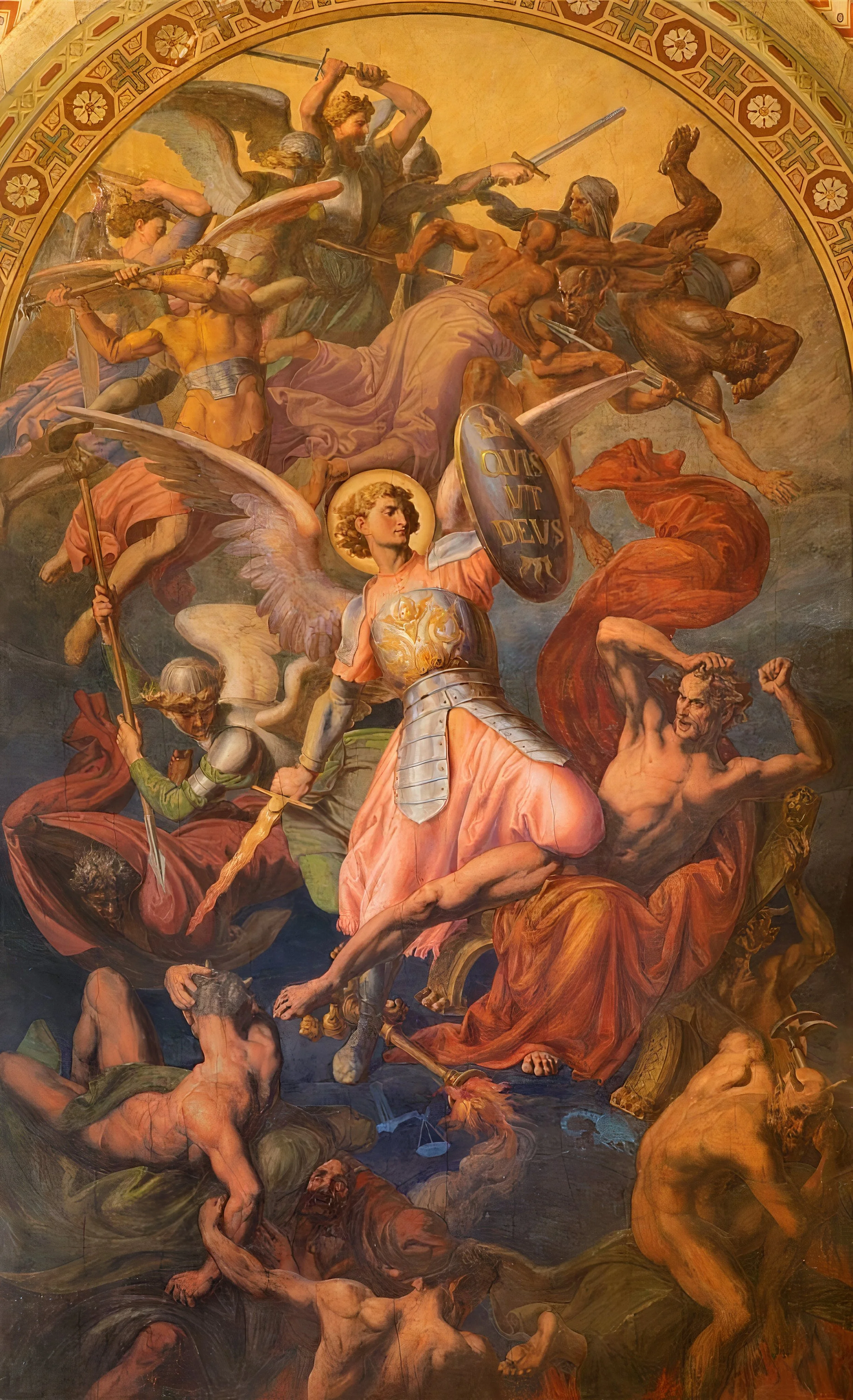
St. Michael’s Catholic Church in Fernandina Beach stands on ground where Catholic life has been present, in one form or another, for more than four centuries.
Amelia Island first appears in Catholic history during the Spanish colonization of Florida. French Huguenots briefly settled there in 1562, calling it “Île de Mai,” but in 1565 the Spanish drove them out, renamed the island Isla Santa María, and brought with them the Catholic faith.
Franciscan missionaries soon established Mission Santa María de Sena on the island (c. 1602), followed later by Mission Santa Catalina de Santa María, serving the Guale and Mocama Native peoples. These missions were short-lived. By the early 1700s English-backed slave raids and warfare devastated mission communities and pushed Catholic Native peoples south toward the safety of St. Augustine.
Mission beginnings on Amelia Island
(1500s–1700s)
When Spain regained Florida after the American Revolution (Second Spanish Period), Catholics once again formed a stable community on Amelia Island. A church census from the 1780s records 103 practicing Catholic families in the Nassau River/Amelia Island area, with sacraments administered by visiting priests such as Rev. Thomas Hassett. Pioneer Catholic family names included Ferreira, Kelley, Lassere, Leddy, Mularkey, Nolan, Powers, Villalonga, and Waas.
In 1811 the Spanish government ordered surveyor George J. F. Clarke to re-plot what is now Old Town Fernandina. In that plan, two lots on Block 2 were reserved as “church lots,” showing that worship space for Catholics was envisioned even before a permanent parish existed. Priests from St. Augustine visited periodically, but the community remained a mission station.
Second Spanish Period and the first Catholic community
(1783–1821)
EXCLUSIVE USAGE RIGHTS PROVIDED BY
AMELIA ISLAND MUSEUM OF HISTORY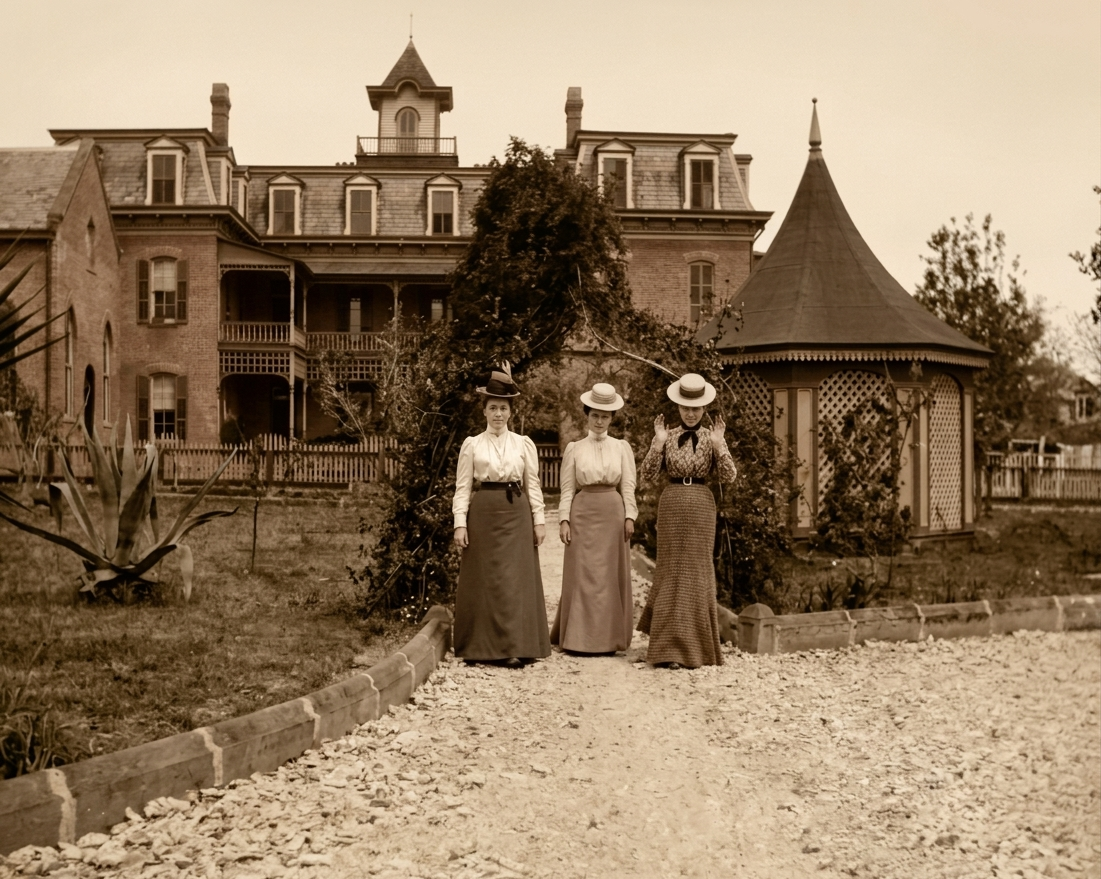
EXCLUSIVE USAGE RIGHTS PROVIDED BY
AMELIA ISLAND MUSEUM OF HISTORY
Florida became a U.S. territory in 1821 and then a state in 1845. Through this period, responsibility for Catholics in Amelia Island passed through several dioceses (Louisiana and the Floridas, Mobile, Savannah, and finally the Vicariate Apostolic of Florida).
Historian Michael Gannon notes that a small Catholic mission church was built in Fernandina around 1844, when Rev. Edmund Aubril, C.P.M., was living on Amelia Island and caring for a string of mission stations along the new transportation routes.
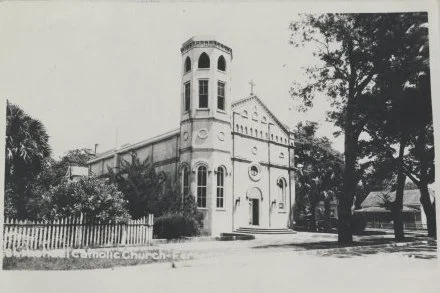
A major turning point came with Senator David Yulee’s Florida Railroad. Beginning in the 1850s, the cross-state line from Fernandina to Cedar Key attracted Irish Catholic laborers and spurred growth. Around 1857 the town relocated from low, marshy ground at Old Town to higher ground a mile south—“New Town” Fernandina—largely to accommodate the railroad. A small wooden Catholic church, almost certainly on the present St. Michael’s site, was under construction by 1859, supplied heavily with lumber from railroad workers.
Territorial Florida, railroads, and “New Town” Fernandina
(1821–1861)
EXCLUSIVE USAGE RIGHTS PROVIDED BY
AMELIA ISLAND MUSEUM OF HISTORY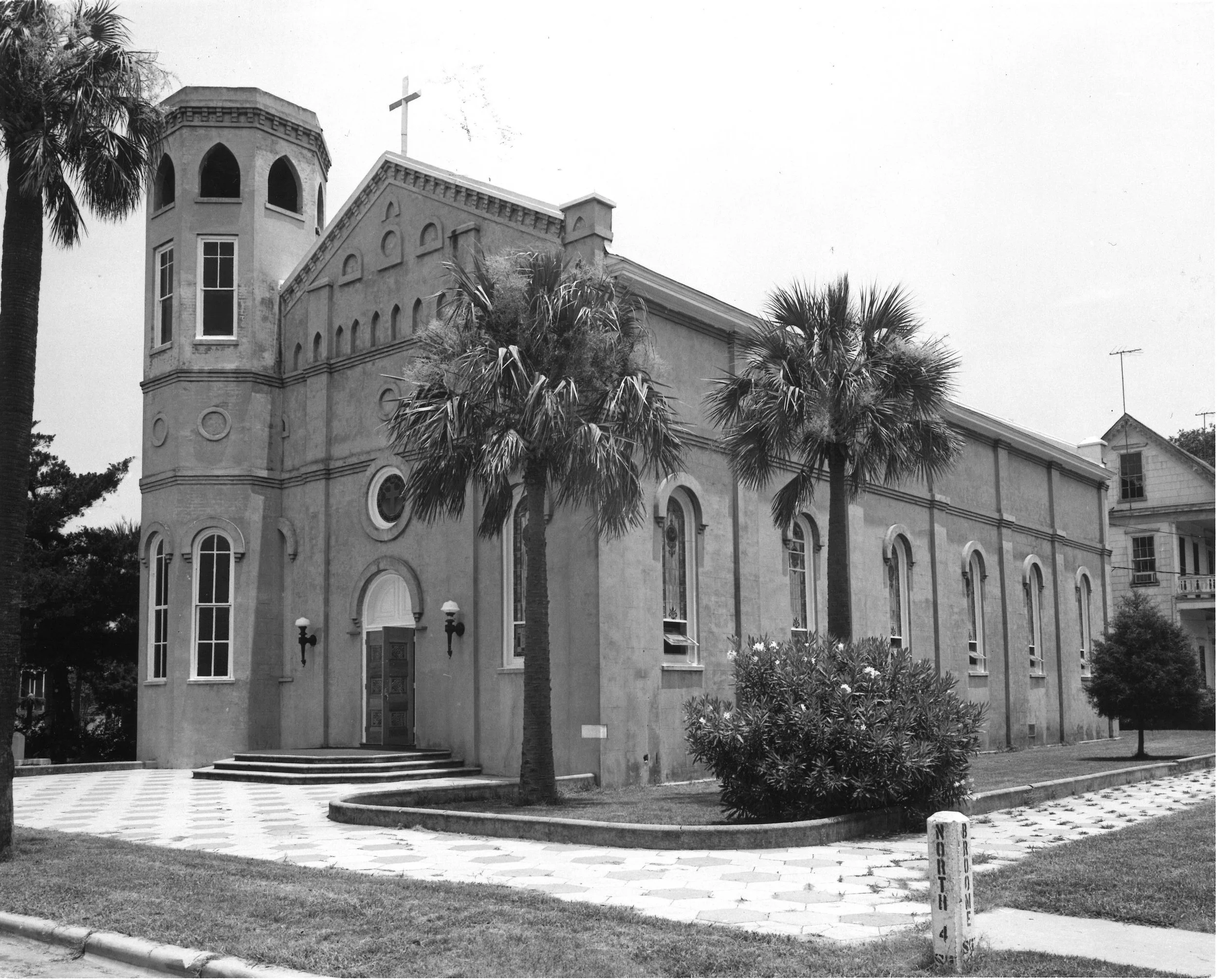
EXCLUSIVE USAGE RIGHTS PROVIDED BY
AMELIA ISLAND MUSEUM OF HISTORY
When Florida seceded from the Union in 1861, Fernandina was garrisoned by Confederate troops. In March 1862, Confederate forces abandoned Amelia Island and Union troops took over. Shortly after the occupation, Union soldiers broke into the Catholic church, stealing vestments and sacred vessels.
Deeply outraged, the mission priest, Rev. Henry Clavreul, slipped through enemy lines to inform Bishop Augustin Verot personally in Savannah. Bishop Verot wrote sharply worded letters to Federal authorities demanding an investigation; a Union general even ordered that every knapsack be searched, though it is unclear whether any of the stolen items were recovered.
Civil War disruption and desecration (1861–1865)
After the war, Fernandina’s economy revived, and the Catholic community stabilized. In 1867 Bishop Verot repurchased the Old Town church lot lost during the war and ordered a “little chapel” to be built there—this would later serve Black Catholics and become the basis for St. Peter Claver Chapel.
In 1869 Fernandina received its first resident priest, Rev. Charles Sartorio, an Italian. He died within a year and is buried just outside the current church entrance. His successor, Very Rev. John Bertazzi from Genoa, Italy, oversaw the construction of a substantial brick church in New Town.
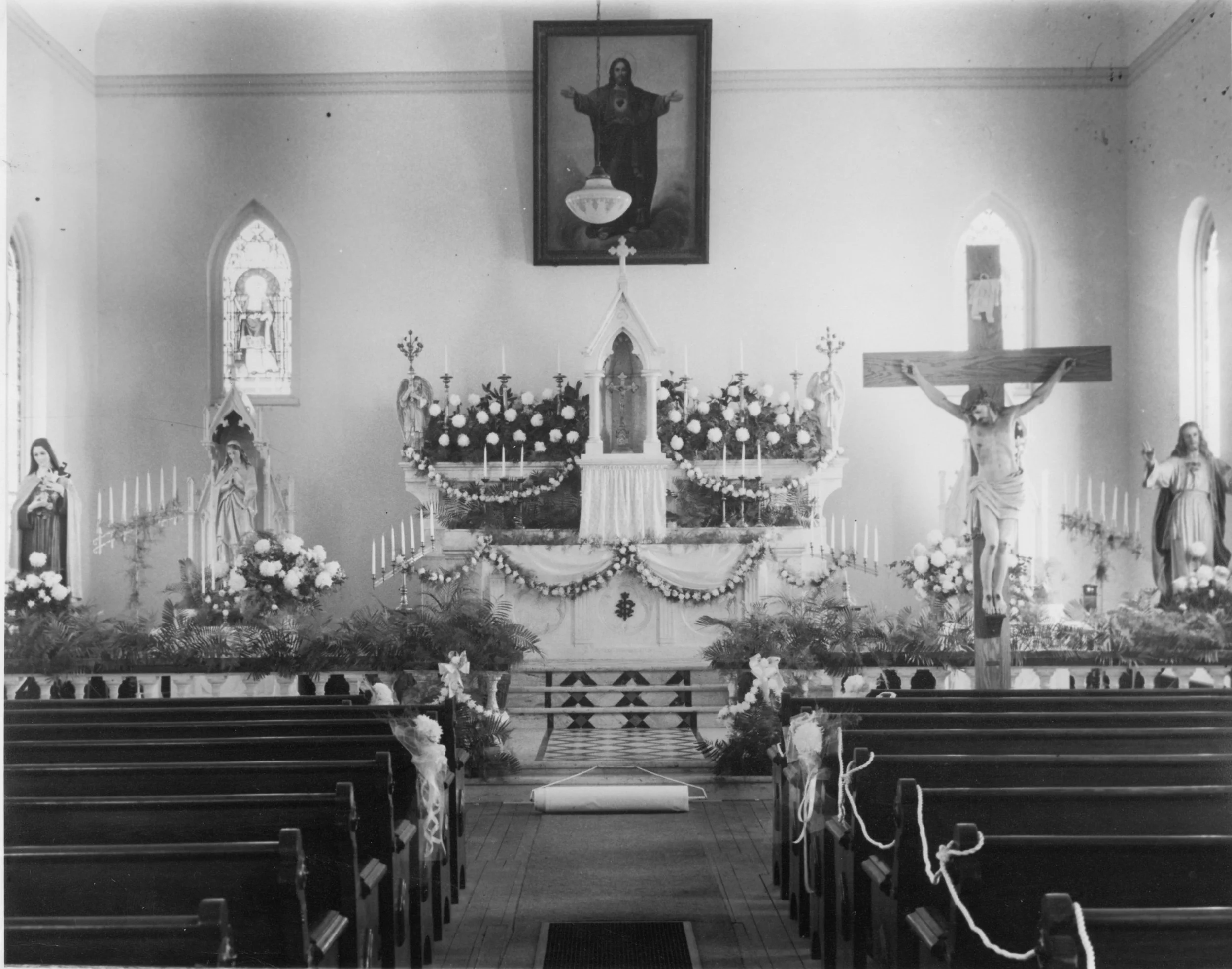
By 1872–1874 Bertazzi had completed a 138-by-42-foot brick building on the northeast corner of Fourth and Broome streets, with a steeple and stained glass. On February 8, 1874, Bishop Verot dedicated this church under the patronage of St. Michael the Archangel, in remembrance of the Franciscan martyr Fray Miguel de Añon. Both Sartorio and Bertazzi lie buried at the church doors.
Rebuilding and a permanent brick church (1869–1874)
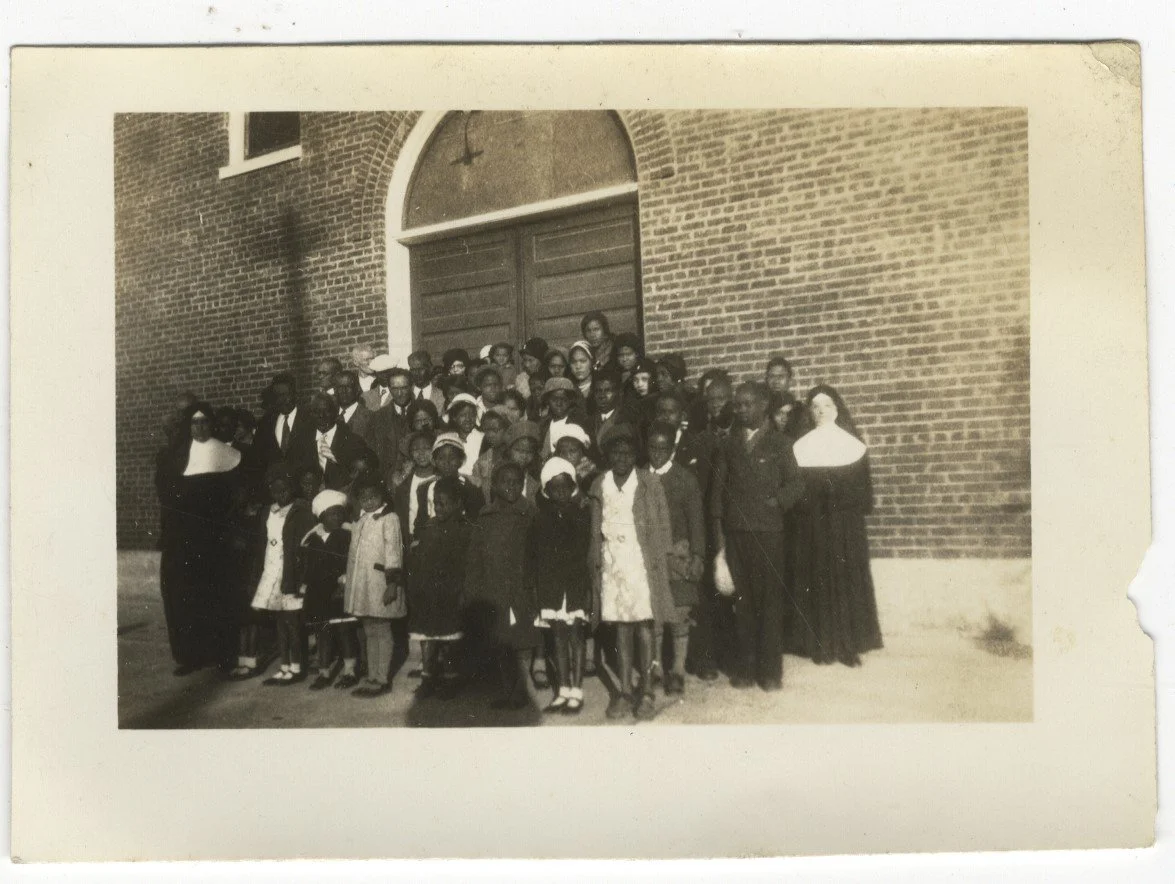
Education quickly became a hallmark of St. Michael’s. In 1871 Fr. Bertazzi invited the Sisters of St. Joseph from St. Augustine to teach First Communion students. Two sisters arrived, living in a rented house and teaching white children and children of color in separate rooms—one of the earliest continuous parochial school efforts in the United States.
By the early 1880s, the sisters had constructed a brick convent and school next to the church, funded in part by generous parishioners and ship captains who donated materials and freight. St. Joseph’s Academy opened in 1882 as a boarding and day school for white students; tuition covered not only classes but room, board, and even music lessons. Over the decades, many local Catholic and non-Catholic children passed through its doors.
The Sisters’ heroism shone during the Yellow Fever epidemic of 1877, when they converted their convent into a makeshift hospital and nursed the sick tirelessly. Two sisters, Mother Celenie and Sr. de Sales, died in the epidemic and were buried in Villalonga Park, the family cemetery beside the church.
The Sisters of St. Joseph and Catholic education
(1871-onward)
EXCLUSIVE USAGE RIGHTS PROVIDED BY
AMELIA ISLAND MUSEUM OF HISTORY
From the late 19th century onward, St. Michael’s also became a center of ministry for Black Catholics. Bishop Verot’s concern for education of formerly enslaved persons brought the Sisters of St. Joseph to Florida in the first place, and Fernandina was one of their early missions.
In the 1880s, pastor Rev. Anthony F. J. Kilcoyne erected St. Peter Claver’s Chapel in Old Town specifically for the “colored contingent” of the parish. Relics of St. Peter Claver are believed to have been placed in the high altar.
Separate schooling for Black children followed. In 1899, St. Katharine Drexel and her Sisters of the Blessed Sacrament donated funds to build a school for children of color in Old Town, often called “St. Peter Claver’s School for Colored Children.” By the 1920s, a new brick church for Black Catholics stood at North 3rd and Calhoun, and the associated school was educating around 80 pupils.
St. Peter Claver School continued until 1959, after which the building was used as a hall and eventually sold in 1974. Though the mission parish itself closed later in the 20th century, its legacy remains an important part of St. Michael’s story.
Ministry to Black Catholics:
St. Peter Claver Chapel and School
Parish reports from 1878–1923 show a lively, growing community. In the early 1880s St. Michael’s counted well over 600 parishioners; by the early 1900s the census lists around 350–400 Catholics on Amelia Island, including a significant population of Black Catholics.
Pastors invested steadily in the physical plant. A rectory was built in the late 1870s; the convent and school followed. Rev. Maurice Foley added a bell tower and a pipe organ around 1900. In 1924, a new 2,300-pound church bell—nicknamed the “Raymond Bell” in honor of benefactor H. H. Raymond—was blessed, replacing an older engine bell dating to 1750.
Parish organizations flourished, including the Knights of Columbus, the St. Peter Claver Society for adults of color, and St. Cecilia’s Sodality for children. During the Spanish-American War, Fr. Foley celebrated military Masses for regiments encamped at Fernandina. Parish life carried on through World Wars I and II and the Great Depression, with pastors like Rev. P. J. Halligan (1933–1952) enlarging the church and adding stained-glass memorial windows.
Growth, parish life, and building projects (late 1800s–mid 1900s)
On April 21, 1954, Archbishop Joseph P. Hurley formally erected St. Michael’s as a parish, assigning it responsibility for all of Nassau County. Until then it had functioned essentially as a mission of the Diocese of St. Augustine.
St. Joseph’s Academy continued under the Sisters of St. Joseph until 1961, when the sisters withdrew sponsorship and sold the school, convent, and hall to St. Michael’s Parish. St. Michael’s School operated into the early 1970s, but declining enrollment and facility needs led to its closure in 1971. For a time the buildings stood vacant; in the late 1980s, they even served as a filming location for The New Adventures of Pippi Longstocking.
The old rectory from the 1870s, in poor repair, was vacated and later demolished. A new rectory was purchased across the street in 1976. Meanwhile, the parish celebrated the 100th anniversary of the church’s dedication in 1972.
From mission to parish and
mid-century changes
(1954–1970s)
Beginning in the 1980s, St. Michael’s undertook significant restoration efforts. The bell tower, stained glass, and exterior brickwork of the church were repaired; the parish hall was renovated. Recognizing the historical and architectural value of the old St. Joseph Academy building, the parish obtained preservation grants in the 1990s to restore it.
In 1999 Bishop John Snyder dedicated St. Michael Academy, reopening Catholic elementary education on the island in the restored academy building. The school began with grades K–4 and later added a middle-school wing, opened in 2005.
As Amelia Island’s population grew, the parish again faced overcrowding. Plans for expansion evolved over several years, balancing historic preservation with pastoral needs. Eventually, Bishop Felipe Estévez approved a project that included a new parish hall, a mission chapel in Yulee, and a major sanctuary expansion. On August 1, 2015, he dedicated the enlarged St. Michael’s Church, providing more seating and updated liturgical space while preserving the historic character of the 1870s brick structure.
Restoration, renewal, and expansion (1980s–present)
From fragile Spanish missions to a thriving modern parish, the history of St. Michael’s Catholic Church weaves together evangelization of Native peoples, the faith of early Spanish and Irish settlers, courageous religious sisters, outreach to Black Catholics, and the perseverance of generations of parishioners. Today’s St. Michael’s stands as both a spiritual home for Nassau County Catholics and a living monument to the deep Catholic roots of Amelia Island.